Will Automated Inspection Equipment Replace Traditional Checking Fixtures?
In the rapidly evolving manufacturing industry, automated inspection equipment is becoming increasingly popular due to its high efficiency, accuracy, and data-driven capabilities. Many manufacturers are asking whether automated inspection systems will eventually replace traditional checking fixtures in automotive and precision manufacturing applications.
The answer is not simply yes or no. While automation brings significant advantages, traditional checking fixtures still play an essential role in modern manufacturing quality control.
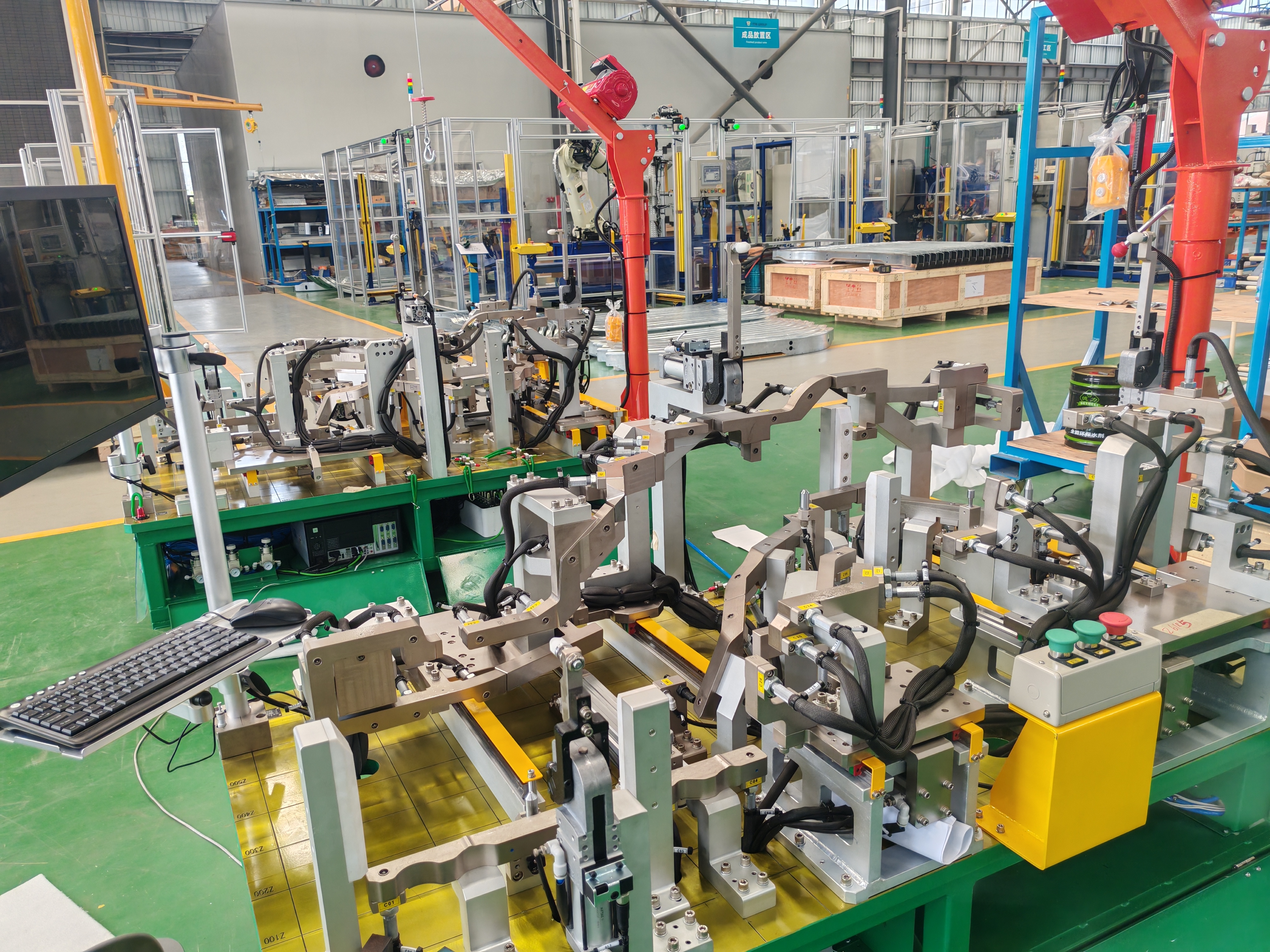
The Advantages of Automated Inspection Equipment
With the development of Industry 4.0 and smart manufacturing, automated inspection equipment has transformed the way manufacturers perform quality inspections. Advanced technologies such as 3D scanning, machine vision, robotic measurement systems, and digital data analysis enable faster and more flexible inspection processes.
Compared with manual inspection methods, automated inspection solutions offer several benefits:
-
Higher inspection efficiency: Automated systems can inspect large volumes of components continuously, reducing inspection time.
-
Improved measurement accuracy: Advanced sensors and scanning technologies provide precise dimensional measurement results.
-
Real-time quality monitoring: Inspection data can be collected and analyzed instantly to improve manufacturing control.
-
Digital traceability: Production data can be stored and connected with smart factory management systems.
These advantages make automated inspection equipment an attractive solution for high-volume production, especially in automotive manufacturing.
Why Traditional Checking Fixtures Are Still Important
Although automated inspection technology continues to advance, traditional checking fixtures remain widely used in automotive stamping, welding, and assembly processes.
A checking fixture provides a fast and reliable method for verifying part dimensions, assembly positions, and geometric accuracy. For many automotive components, operators can quickly place the part on the fixture and identify deviations through contact points, gauges, and measuring tools.
The key advantages of checking fixtures include:
-
Simple operation: Operators can perform inspections quickly without complex programming.
-
High repeatability: Custom-designed fixtures ensure consistent inspection results.
-
Cost effectiveness: For mass production projects, checking fixtures provide an economical inspection solution.
-
Production line compatibility: Fixtures can be directly integrated into stamping and welding production lines.
For automotive suppliers producing thousands of identical parts, checking fixtures remain an efficient and practical quality control tool.
The Future Is a Combination of Smart Inspection and Traditional Fixtures
Instead of completely replacing checking fixtures, automated inspection equipment will likely work together with traditional inspection methods.
Future manufacturing environments will combine:
-
Digital inspection systems
-
Automated measurement equipment
-
Smart checking fixtures
-
3D scanning technology
-
Data-based quality management platforms
For example, a manufacturer may use a checking fixture for fast production line verification while using an automated inspection system for detailed dimensional analysis and process optimization.
This hybrid approach allows companies to achieve higher efficiency while maintaining reliable quality control.
Choosing the Right Inspection Solution for Your Manufacturing Needs
Different manufacturing processes require different inspection methods. Automotive stamping parts, welding assemblies, and precision components may need customized solutions based on production volume, accuracy requirements, and project budget.
A professional checking fixture manufacturer can provide customized inspection solutions, including automotive checking fixtures, welding inspection fixtures, and automated inspection systems to meet different customer requirements.
With the continuous development of smart manufacturing, the future of quality inspection is not about replacing traditional tools but creating smarter and more efficient inspection systems.
Conclusion
So, will automated inspection equipment replace traditional checking fixtures? The answer is unlikely in the near future. Automated systems will continue to grow because of their flexibility and data capabilities, but checking fixtures will remain valuable due to their reliability, speed, and cost advantages.
The future of manufacturing quality control will be a combination of automation technology and customized checking fixtures, helping manufacturers achieve higher precision, better efficiency, and stronger competitiveness in the global market.