The automotive industry relies heavily on inspection fixtures (checking fixtures) because they provide a reliable, repeatable, and efficient method for verifying the dimensional accuracy, geometric conformity, and assembly compatibility of automotive components throughout the manufacturing process.
In simple terms, an inspection fixture acts as a physical quality standard that translates CAD design data, GD&T requirements, and engineering specifications into a practical tool for production line validation.
1. Ensuring Dimensional Accuracy and Part Consistency
Modern vehicles consist of thousands of components manufactured by multiple suppliers worldwide. Maintaining consistent dimensions across the entire supply chain is critical.
Automotive components such as:
Body-in-White (BIW) panels
stamping parts
sheet metal components
plastic injection molded parts
interior and exterior trim components
must meet strict dimensional tolerances to ensure proper vehicle assembly.
For example, if a door outer panel exceeds the allowable tolerance, it may cause:
Inspection fixtures enable manufacturers to quickly verify whether components meet the required dimensional tolerance and geometric specifications.
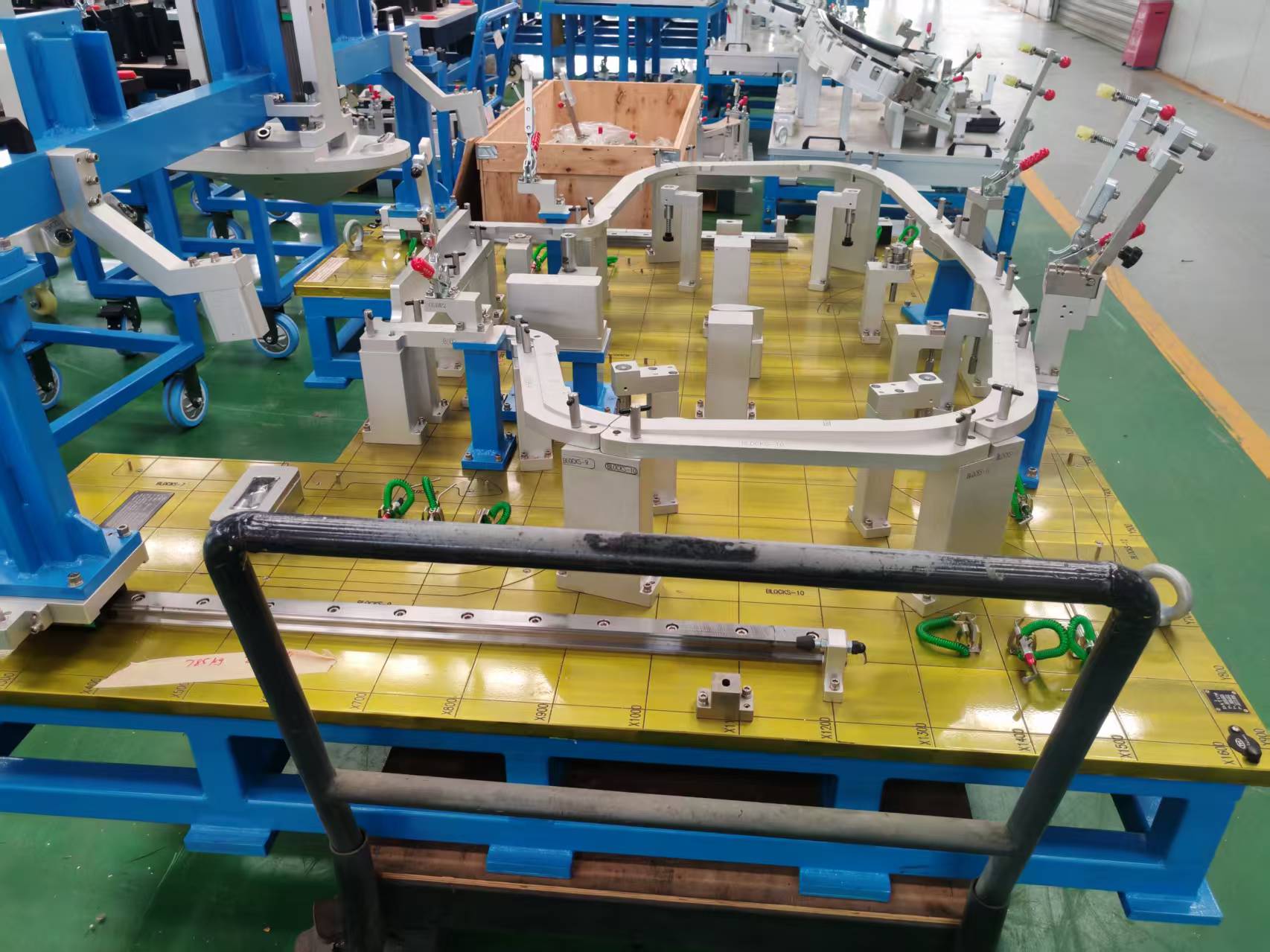
2. Improving Manufacturing Efficiency and Quality Control
Automotive production requires high-volume manufacturing with consistent quality output.
Although advanced measurement equipment such as Coordinate Measuring Machines (CMM) provides highly accurate inspection results, it is often too slow and costly for every part inspection on the production line.
Inspection fixtures provide a faster Go/No-Go inspection method:
The component is positioned using locating pins and datum references.
The part is secured with clamping mechanisms.
Critical features are checked using gauges, feeler gauges, dial indicators, or electronic measurement systems.
This allows operators to perform rapid in-process inspection and maintain stable production quality.
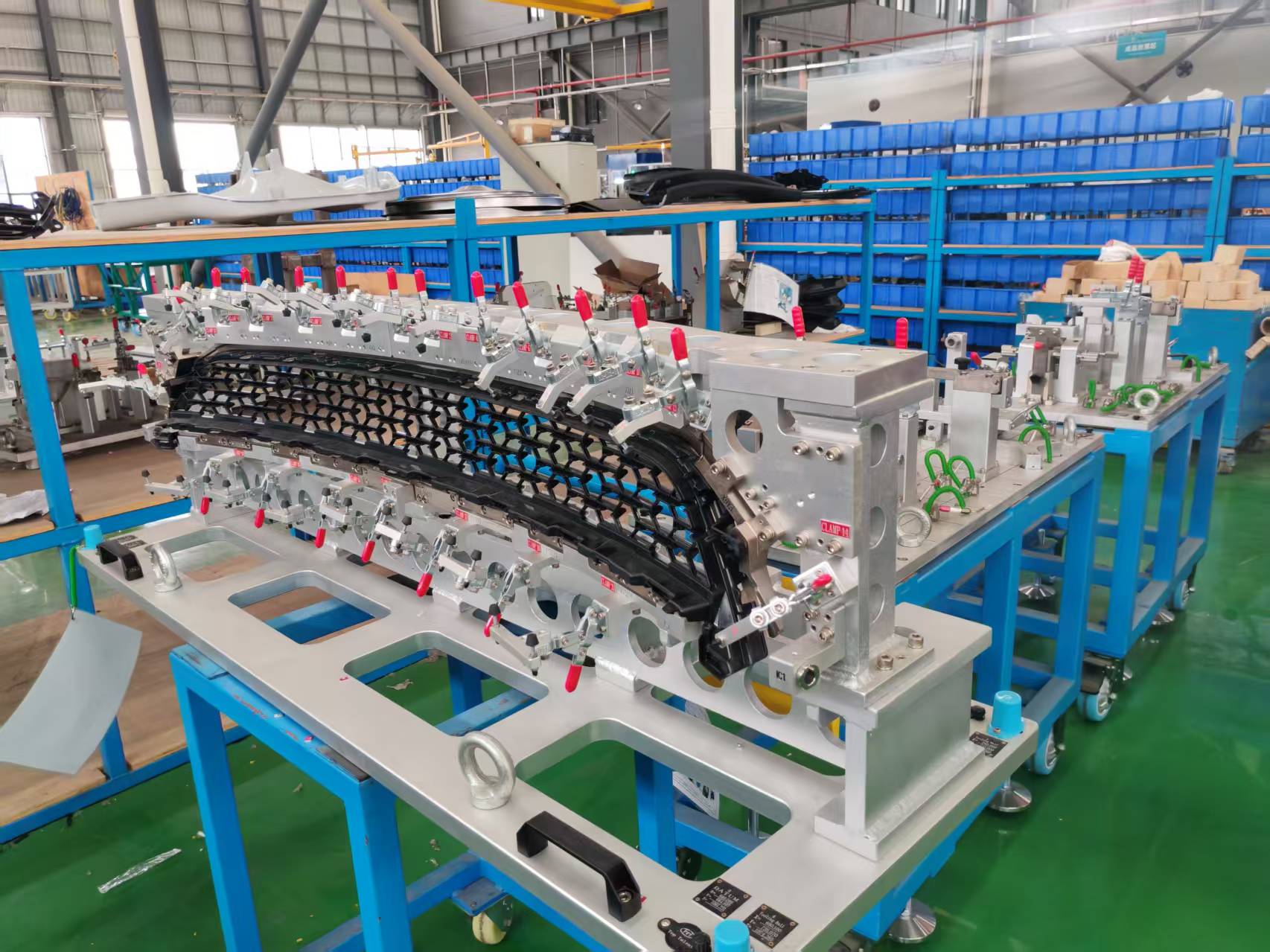
3. Guaranteeing Assembly Accuracy and Vehicle Fit & Finish
Automotive manufacturing is not only about producing individual qualified parts; it requires precise interaction between thousands of components.
Inspection fixtures help control critical vehicle assembly characteristics, including:
For example, body components such as:
doors
fenders
bumpers
lighting systems
roof panels
must work together with extremely tight dimensional control.
Without proper inspection fixtures, dimensional variation can accumulate and result in:
4. Supporting Automotive Product Development and Mass Production
Inspection fixtures are essential throughout the entire automotive product lifecycle:
Product Development Phase
Used for validating design feasibility, CAD data, and engineering requirements.
Tooling and Prototype Phase
Used to verify parts produced by:
stamping dies
injection molds
welding fixtures
Launch and Validation Phase
Supports PPAP (Production Part Approval Process) and supplier quality approval.
Mass Production Phase
Provides continuous process quality control and production monitoring.
5. Inspecting Complex Automotive Geometries
Many automotive components have complex shapes that cannot be effectively measured using traditional tools such as calipers or micrometers.
Examples include:
curved exterior panels
large plastic components
welded body assemblies
interior modules
Inspection fixtures use:
master locating points
datum systems
profile checking surfaces
flush and gap measurement features
functional assembly simulations
to replicate actual vehicle installation conditions.
6. Supporting Traceability and Supplier Quality Management
Modern automotive manufacturing requires strong quality assurance systems and traceability control.
Inspection fixtures help manufacturers:
identify dimensional deviations early
control supplier quality
analyze process variation
reduce defect rates
support continuous improvement programs such as Lean Manufacturing and Six Sigma
When a quality issue occurs, inspection fixture records help engineers quickly identify whether the problem originates from:
Common Types of Automotive Inspection Fixtures
| Inspection Fixture Type | Application |
|---|
| Stamping Part Checking Fixture | Inspection of automotive sheet metal and stamped components |
| BIW Inspection Fixture | Verification of body structure dimensional accuracy |
| Welding Assembly Fixture | Checking welded component positioning and accuracy |
| Interior Trim Inspection Fixture | Validation of dashboards, door panels, and interior modules |
| Plastic Part Inspection Fixture | Inspection of bumpers, lamps, and injection molded parts |
| Functional Checking Fixture | Verification of holes, mounting points, and assembly functions |
Why Is the Automotive Industry More Dependent on Inspection Fixtures Than Other Industries?
| Automotive Manufacturing Characteristics | Requirement for Inspection Fixtures |
|---|
| Extremely high production volume | Fast and repeatable inspection |
| Global supplier network | Standardized quality verification |
| Strict safety requirements | Accurate dimensional control |
| High appearance expectations | Precise gap and flushness control |
| Complex assembly relationships | Reliable fit and interface validation |
Conclusion
Inspection fixtures are an indispensable part of automotive manufacturing because they transform engineering requirements, CAD data, and GD&T specifications into practical production quality standards.
They ensure:
Without inspection fixtures, achieving high-volume automotive production with consistent quality, low rework rates, and reliable vehicle performance would be extremely difficult.