In modern manufacturing, fixture design (jigs and fixtures) is often underestimated, yet it plays a decisive role in both production efficiency and product quality. Whether in automotive manufacturing, aerospace engineering, precision machining, welding systems, or inspection fixtures, the fixture is the critical interface between design intent and real-world production.
A well-designed fixture is not just a supporting tool—it is a core element of industrial automation, process stability, and mass production consistency.
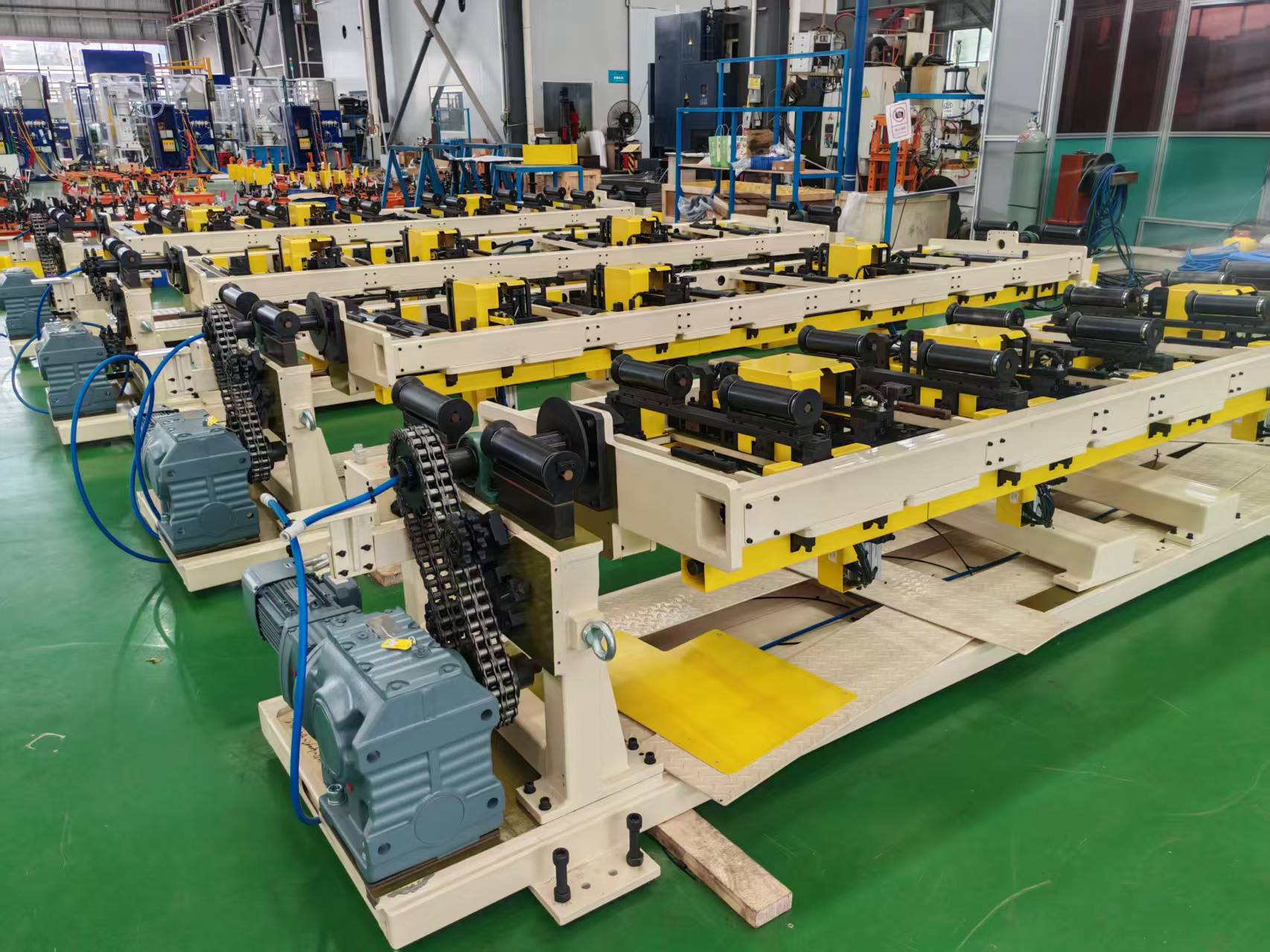
1. Fixture Design Determines Positioning Accuracy
The foundation of any high-quality product lies in dimensional accuracy and repeatability, and this starts with precise positioning.
A fixture is responsible for locating and securing the workpiece in a fixed, repeatable position. If the fixture lacks rigidity or accuracy, every machining or assembly process will introduce variation, even when using high-precision CNC machines.
A professional industrial fixture design must follow the principle of six-point location (6-Point Locating Principle) to fully constrain the workpiece in 3D space. Poor design may lead to:
-
Over-constraint causing deformation
-
Under-constraint causing instability
-
Inconsistent datum reference causing cumulative tolerance errors
In industries such as automotive welding fixtures and aerospace machining fixtures, even a 0.1mm deviation can result in assembly failure or poor fitment, proving that fixture accuracy directly defines product quality.
2. Fixture Design Ensures Repeatability in Mass Production
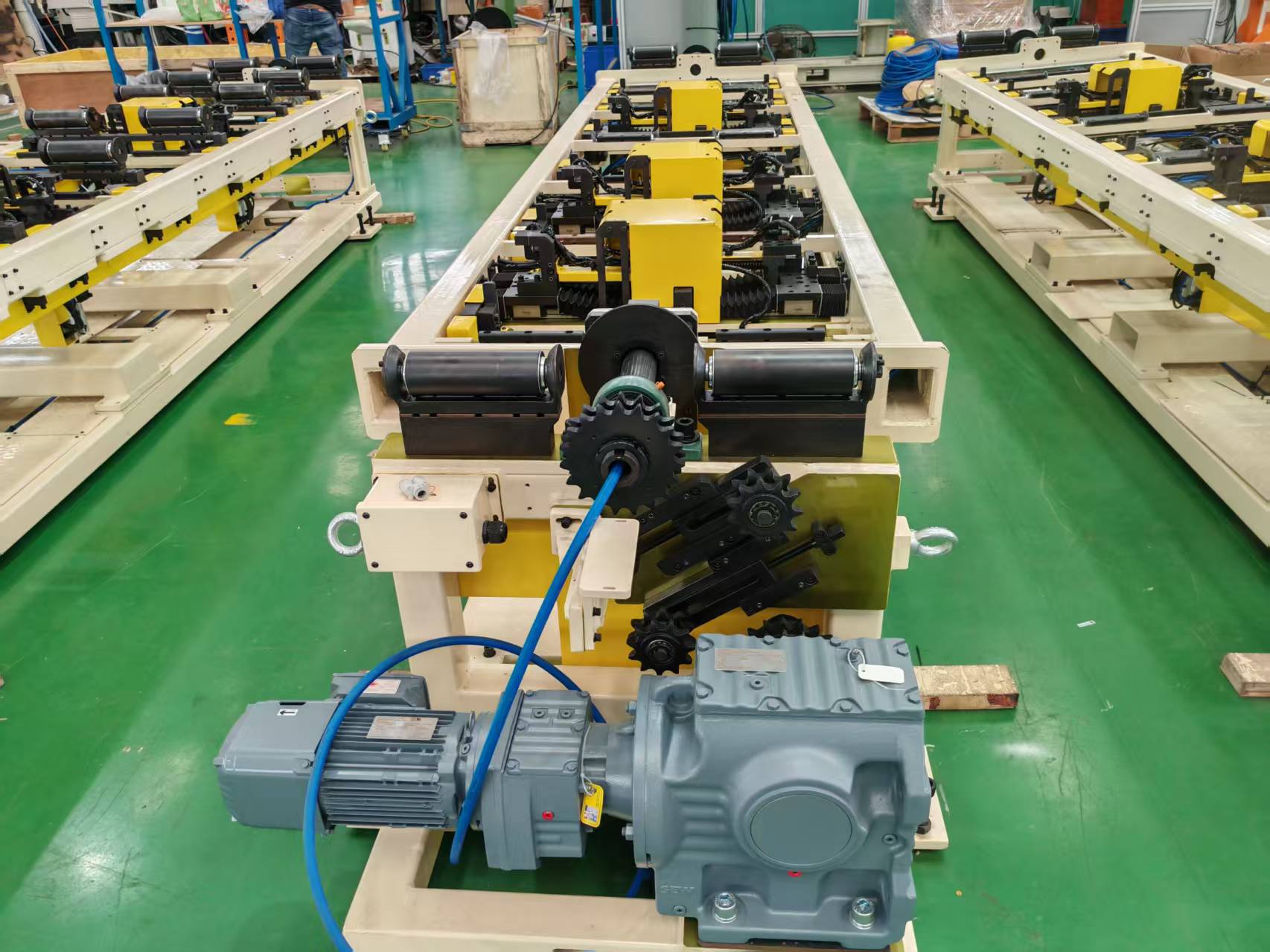
In high-volume manufacturing, consistency is more important than single-piece accuracy. A well-engineered fixture ensures that every part is processed under identical conditions.
With a proper production fixture system, operators only need to:
-
Load the part
-
Clamp it securely
-
Start machining or assembly
This eliminates variability caused by manual alignment and operator experience.
As a result, fixture design significantly improves:
-
Production repeatability
-
Process stability
-
Yield rate (first-pass yield, FPY)
-
Quality control consistency
This is especially critical in automotive production lines, stamping dies, and welding assembly fixtures, where thousands of identical parts are required daily.
3. Fixture Design Reduces Cycle Time and Improves Efficiency
One of the most important performance indicators in manufacturing is cycle time (production takt time). Fixture design directly affects how fast a part moves through the production process.
A high-performance fixture reduces time in several ways:
Faster Loading and Clamping
Using pneumatic fixtures, hydraulic fixtures, or quick-lock mechanisms, clamping time can be reduced from minutes to seconds.
Reduced Alignment Time
Instead of manual positioning and measurement, a precision fixture ensures immediate and accurate placement.
Quick Changeover Capability
Modular fixture systems support flexible manufacturing systems (FMS) and reduce downtime during product switching.
Poor fixture design, on the other hand, leads to:
-
Difficult part loading/unloading
-
Tool interference
-
Repeated adjustments
All of which significantly reduce CNC machine utilization rate and overall productivity.
4. Fixture Design Reduces Labor Dependency and Cost
A well-designed fixture enables standardized manufacturing processes, reducing reliance on highly skilled operators.
Without proper fixtures:
-
Quality depends heavily on operator experience
-
Training time is longer
-
Production quality fluctuates
With advanced fixture systems:
-
Process becomes semi-automated or fully standardized
-
Human error is minimized
-
Even entry-level operators can achieve high precision
This is a key advantage in modern lean manufacturing and industrial automation systems, helping companies reduce labor cost while improving output consistency.
5. Fixture Design Maximizes Machine Utilization
Many factories mistakenly believe that machine speed determines productivity. In reality, non-cutting time (loading, unloading, adjustment) often accounts for a large portion of total production time—and fixture design directly impacts this.
A poorly designed fixture leads to:
-
Idle CNC machines
-
Frequent stoppages
-
Manual adjustments
-
Inefficient workflows
A well-optimized machining fixture or welding fixture system enables:
-
Multi-face machining in a single setup
-
Reduced repositioning
-
Continuous production flow
This significantly increases equipment utilization rate (OEE – Overall Equipment Effectiveness).
6. Fixture Design Improves Safety and Process Stability
In high-speed machining and heavy-duty manufacturing environments, fixture safety is critical.
Poor fixture design may cause:
-
Workpiece ejection
-
Tool collision
-
Clamping failure
A professional industrial fixture solution includes:
-
Proper clamping force calculation
-
Anti-loosening mechanisms
-
Safety locking systems
-
Operator protection design
This ensures stable production while reducing the risk of machine damage or workplace accidents.
7. Fixture Design Defines the Manufacturing Process Itself
Advanced fixture engineering does more than hold a part—it defines how the part is manufactured.
A strong fixture design can enable:
-
One-time clamping for multi-surface machining
-
Integration with robotic automation systems
-
Compatibility with CNC machining centers
-
Support for automated inspection and checking fixtures
In contrast, weak fixture design forces manufacturers to:
-
Split processes into multiple setups
-
Increase handling time
-
Reduce automation potential
Therefore, fixture design directly influences the entire manufacturing process planning (MPP).
Conclusion: Fixture Design is the Hidden Core of Manufacturing Efficiency
In modern industrial production, machines and materials are important—but fixture design is what determines how effectively they are used.
In simple terms:
Machines determine capability. Fixture design determines efficiency, precision, and stability.
A high-quality fixture system can deliver:
-
Higher machining accuracy
-
Faster production cycle time
-
Lower labor cost
-
Improved safety
-
Higher overall equipment efficiency (OEE)
This is why leading manufacturers in automotive tooling, aerospace fixtures, welding systems, and precision machining industries invest heavily in professional fixture engineering.
Ultimately, fixture design is not just an auxiliary process—it is a strategic foundation of modern manufacturing competitiveness.