Designing a fixture for sheet metal parts requires more than simply creating a structure to hold the component in place. Sheet metal parts can vary in shape, thickness, material, and dimensional stability, making proper fixture design essential for accurate inspection, assembly, welding, and manufacturing.
A well-designed fixture should provide stable positioning, repeatable locating, sufficient accessibility, and reliable support without introducing unnecessary deformation. These considerations become especially important in automotive manufacturing, where sheet metal components often have complex profiles and tight dimensional requirements.
1. Understand the Part Geometry
The first step in fixture design is to understand the geometry and functional requirements of the sheet metal part.
Automotive sheet metal components may include curved surfaces, flanges, holes, slots, embossments, and irregular edges. The fixture should be designed around the actual locating and inspection requirements rather than simply following the external shape of the part.
Important information includes:
- Part dimensions and tolerances
- Datum points and datum surfaces
- Hole locations
- Critical edges and profiles
- Welding areas
- Functional mounting points
- Areas requiring dimensional inspection
A clear understanding of these characteristics helps engineers determine where the part should be located and supported.
2. Establish a Reliable Locating Strategy
Locating is one of the most important considerations in sheet metal fixture design.
The fixture must constrain the part sufficiently to prevent unwanted movement while avoiding excessive restriction. A typical locating strategy uses primary, secondary, and tertiary locating references to control movement in different directions.
For automotive sheet metal parts, locating pins, locating blocks, support pads, and adjustable locators may be used depending on the part geometry.
The locating system should provide:
- Repeatable positioning
- Stable contact
- Easy part loading and unloading
- Minimal interference with inspection or welding
- Consistent measurement results
Poor locating design can lead to inconsistent part positioning and unreliable inspection results, even when the fixture itself is manufactured accurately.
3. Control Sheet Metal Deformation
Sheet metal is generally more flexible than machined components, so deformation must be considered during fixture design.
If a locator or clamp applies excessive force to a thin sheet metal component, the part may deform during loading. The fixture may then measure or assemble a distorted condition rather than the actual free-state geometry.
Support points should therefore be distributed according to the stiffness of the component.
For larger automotive panels, additional support points may be required around weak or flexible areas. At the same time, unnecessary support should be avoided because excessive contact can affect the natural position of the part.
4. Select Appropriate Clamping Methods
Clamping should secure the part without changing its intended geometry.
Depending on the application, fixture designers may use manual clamps, pneumatic clamps, toggle clamps, or other mechanisms.
For production fixtures, pneumatic clamping can provide consistent clamping force and improve operator efficiency. For inspection fixtures, the clamping method should be carefully selected so that it does not influence the dimensional condition being measured.
Clamp locations should normally be positioned close to supporting points to minimize local deformation.
5. Consider Inspection Accessibility
For inspection applications, accessibility is a major fixture design consideration.
Inspection points must remain accessible to measuring equipment, gauges, probes, scanners, or other inspection devices. A fixture that accurately locates the part but blocks critical measurement areas may create practical problems during production.
Modern automotive inspection fixtures may combine physical locating elements with digital measurement technologies. Depending on the application, inspection can involve CMM systems, portable measurement equipment, optical scanners, or electronic inspection systems.
The fixture should therefore be designed together with the inspection process rather than treated as an independent structure.
6. Avoid Interference With Manufacturing Processes
When a fixture is used for welding, assembly, or manufacturing, the fixture must provide sufficient access for tools and equipment.
For example, welding fixtures need to provide access for welding guns, robots, clamps, and other equipment. Assembly fixtures may require sufficient space for fasteners and tools.
During the design stage, engineers should check potential interference between:
- Fixture components
- Sheet metal parts
- Welding equipment
- Robotic arms
- Inspection equipment
- Operator working areas
Digital 3D simulation can help identify interference before the fixture is manufactured.
7. Use Suitable Fixture Materials and Components
Material selection affects fixture durability, accuracy, and maintenance requirements.
Steel, aluminum, engineering plastics, and other materials may be selected according to the application. High-strength steel components can be used for structural areas, while aluminum may be suitable where lower fixture weight is beneficial.
Wear components such as locating pins and contact blocks should also be designed for replacement when necessary.
For production environments, modular fixture components can make maintenance and future modifications easier.
8. Consider Datum and Tolerance Requirements
Fixture design should be closely connected with the part's dimensional tolerance system.
The fixture should reference the appropriate part datums and avoid creating unnecessary tolerance accumulation. Critical dimensions should be supported and located from reliable references.
This is particularly important for automotive body components, where several sheet metal parts may later be assembled together.
A fixture that is designed without considering the part datum structure may produce positioning errors that become more significant during downstream assembly.
9. Make Loading and Unloading Simple
Fixture usability is another important consideration.
Operators should be able to load and remove sheet metal parts quickly and consistently. Locators and clamps should be easy to identify and operate.
A practical fixture should minimize:
- Incorrect part loading
- Operator adjustment
- Excessive clamping steps
- Difficult-to-reach components
- Risk of damaging the part
For high-volume automotive production, even small improvements in loading time can have a significant effect on overall production efficiency.
10. Plan for Repeatability and Maintenance
A fixture should maintain its locating accuracy throughout its service life.
Wear, contamination, accidental impact, and repeated loading can gradually affect fixture accuracy. Replaceable locating pins, bushings, pads, and contact elements can help simplify maintenance.
Inspection fixtures should also be checked periodically to confirm that their reference points remain within the required tolerance.
Good fixture design therefore considers not only initial accuracy but also long-term repeatability.
Conclusion
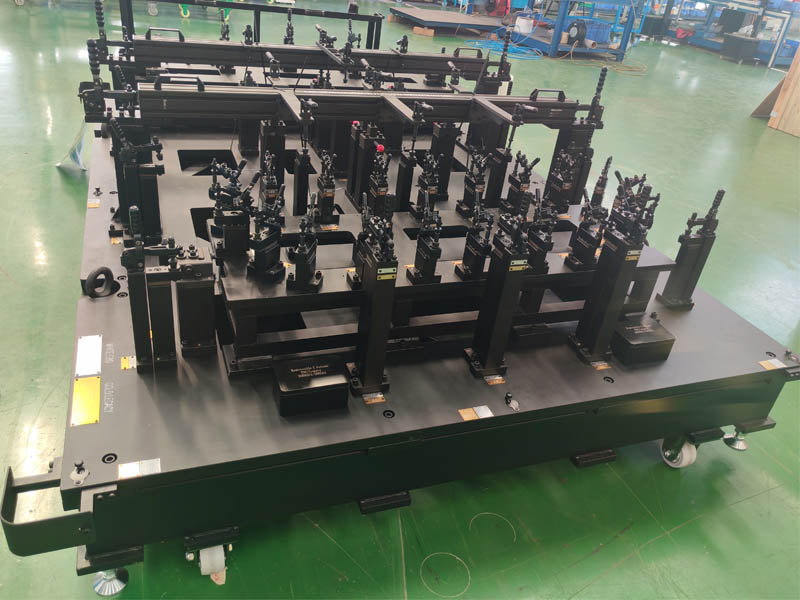
Effective fixture design for sheet metal parts requires a balance between positioning accuracy, part stability, accessibility, deformation control, operator usability, and long-term durability.
For automotive applications, the fixture should be developed around the actual part datums, critical dimensions, inspection requirements, and manufacturing process. Proper locating and support can improve repeatability, while appropriate clamping and accessibility can make the fixture easier to use in real production environments.
Whether the application involves an inspection fixture, welding fixture, assembly fixture, or production fixture, careful consideration during the design stage can help reduce dimensional variation and improve manufacturing consistency.
TTM GROUP provides fixture design and manufacturing solutions for automotive applications, supporting inspection, welding, assembly, and production processes with application-specific fixture concepts.